





A complete analysis of the safety, risks, and possible consequences of laser hair removal
Contents
- ❤️🩹 Laser hair removal and health: how the procedure affects the body
- ❤️🩹 Factors that increase the safety of laser hair removal
- ❤️🩹 What are the risks of laser hair removal?
- ❤️🩹 Popular myths about the harm of laser hair removal
- ❤️🩹 Complications after laser hair removal and normal skin reactions
- ❤️🩹 Long-term effects of laser hair removal
- ❤️🩹 Conclusion
Laser hair removal has long moved beyond being an elite cosmetic procedure — today, it is accessible to millions of people worldwide and is considered an effective method of long-term hair removal. But with growing popularity come more questions: how safe is this technology really? What are the actual risks, and are there any long-term effects of laser hair removal that you should be aware of in advance?
This article offers an honest and detailed analysis: what science says, how laser hair removal actually affects the body, and where the line lies between myths and facts. We’ll explore not only the potential harm of laser hair removal but also its proven effectiveness — so you can make informed decisions based on facts, not fear.

Laser hair removal and health: how the procedure affects the body
The mechanism of laser hair removal is both simple and ingenious: a concentrated beam of light of a specific wavelength penetrates the skin and is absorbed by melanin — the pigment found in hair follicles. As melanin absorbs the laser’s energy, it heats up, and the resulting heat destroys the hair follicle without damaging the surrounding tissue. This is a key point: the laser works selectively, “seeing” only the target and not the surrounding skin.
It is important to understand that the effect of laser hair removal on the body is limited to the surface layer. Despite common fears, laser radiation does not penetrate into the body and has no impact on internal organs. It is not ionizing radiation (such as X-rays), and it does not accumulate in the body. Therefore, the safety of laser hair removal — when done properly — is supported by both physics and medicine.
The procedure is approved by respected authorities such as the FDA (U.S. Food and Drug Administration) and equivalent agencies in Europe. This means the technology has undergone extensive clinical testing and is recognized as safe when protocols are followed. In practice, various types of lasers have been used worldwide for over two decades, and the accumulated experience shows that the benefits of laser hair removal — in reducing hair growth and minimizing skin irritation from shaving or waxing — far outweigh the potential risks.
Thus, in the absence of contraindications and when performed by a qualified specialist, the laser acts locally and effectively without causing systemic changes in the body. It is a precise, modern technology, proven over time, supported by science, and trusted by millions of satisfied clients.
 Factors that increase the safety of laser hair removal
 Factors that increase the safety of laser hair removal
While the safety of laser hair removal largely depends on the technology itself, human and organizational factors also play a significant role. These are the elements that determine how comfortable and risk-free the procedure will be in a particular case. Here are the main conditions that help minimize the risks of laser hair removal:
- Qualification and experience of the specialist. A professional with medical or cosmetology training knows how to adjust laser parameters according to skin type, hair density, and color, and is also able to assess potential contraindications to laser hair removal.
- Modern and certified equipment. Different types of lasers work differently — alexandrite, diode, Nd:YAG — each has its own wavelength and penetration depth. The device should not only be suitable for the client’s needs but also undergo regular maintenance.
- Individually tailored laser settings. Properly adjusted power and pulse duration reduce the risk of burns, irritation, and other complications after the procedure.
- Thorough pre-treatment consultation. A client’s answers about medications, hormonal changes, and chronic conditions help the technician make safe decisions. Withholding such information can be dangerous.
- Following pre- and post-procedure care instructions. Avoiding sun exposure, refraining from aggressive skincare products, and maintaining hygiene all reduce the risk of inflammation and pigmentation.
As you can see, laser hair removal and health are not only about the technology — they’re also about shared responsibility between the specialist and the client. Following these factors allows for achieving the desired result without unpleasant consequences or concerns.

What are the risks of laser hair removal?
Despite the high effectiveness and general safety of laser hair removal, like any aesthetic procedure, it carries potential side effects. It’s important to understand that when protocols are followed, settings are individually adjusted, and the treatment is performed by a qualified specialist, the likelihood of serious complications is extremely low. Moreover, most side effects are temporary and resolve on their own. Here are the most common risks of laser hair removal:
- Burns during laser hair removal. These can occur if the laser power is set too high or the procedure is performed incorrectly. This risk is higher for darker skin types, which contain more melanin. However, with proper settings and technique, the risk of burns is minimal.
- Irritation after laser hair removal. This is a normal skin reaction following the procedure. It typically appears within the first few hours and rarely lasts more than a few days. It usually resolves without treatment, though soothing creams containing panthenol or aloe vera may be used.
- Pigmentation changes after laser hair removal. Hypo- or hyperpigmentation may appear, especially in people with darker skin or in cases where aftercare recommendations are not followed (e.g., tanning before or after the procedure). These changes are typically temporary.
When compared with alternative methods, the risks of laser hair removal are significantly lower. For example, shaving can cause micro-cuts, ingrown hairs, and chronic irritation, while waxing can damage capillaries and trigger inflammation. Therefore, with a proper approach, the benefits of laser hair removal are undeniable — it remains one of the safest methods for long-term hair reduction.
Popular myths about the harm of laser hair removal
- You can’t get laser hair removal on tanned or dark skin. This used to be true, but not with modern lasers. The MOVEO technology used in our salon network is safe for all skin phototypes, including naturally dark and tanned skin.
- Laser hair removal causes cancer. There is no scientific evidence that laser hair removal causes skin cancer or any other type of cancer. The laser targets only the hair follicle and does not penetrate deep into the tissues. While cancer is a contraindication for laser hair removal, the procedure itself is safe for healthy individuals. This myth likely arose from confusion with UV radiation — whereas lasers used in hair removal operate in a completely different range.
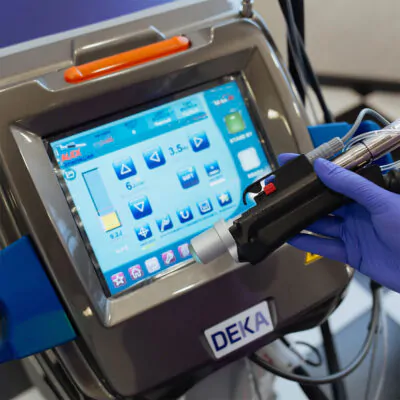
- Laser hair removal always causes redness and swelling. Mild irritation is possible, but with modern lasers (such as the Motus AX with MOVEO handpiece), it is minimal and resolves quickly. In most cases, the skin fully recovers within a few hours.
- Laser hair removal is harmful for sensitive areas. On the contrary, areas like the face, bikini, or underarms are often treated with a laser because it is the gentlest and most precise hair removal method. The Motus AX with MOVEO technology is ideal even for sensitive skin.
- Laser hair removal is painful. In the past, the procedure could be uncomfortable. However, modern technologies like MOVEO have made it painless. Thanks to the integrated cooling system and motion-based technique, the treatment is comfortable and does not require anesthetics — which is especially important for people with sensitive skin or a low pain threshold.
 Complications after laser hair removal and normal skin reactions
 Complications after laser hair removal and normal skin reactions
After laser hair removal, the skin may respond in various ways — it’s important to understand what is considered normal and when it becomes a reason for concern. Below we outline the most common reactions, explaining when there’s no need to worry and when it’s best to consult a specialist.
Normal reactions after laser hair removal:
-
Mild redness and swelling in the treated area — a natural response to the laser’s thermal effect. Usually disappears within a few hours, rarely lasting up to 2 days.
-
Tingling, a warm sensation, or mild itching — may occur for 1–2 days, especially in people with sensitive skin.
-
Red dots at the base of the hairs (follicular edema) — a sign that the laser targeted the follicles and the hair destruction process has begun.
-
Slight peeling or dryness — usually resolves with the use of moisturizers.
-
Shedding of hair 10–21 days after the session — an expected effect and a sign that the treatment is working, not a cause for concern.
When to be cautious and seek medical advice:
-
Severe itching, burning, blisters, or rashes that persist for more than 3 days — this may indicate an allergic reaction to gel, anesthetic, or a natural immune response to destroyed melanin.
-
Painful or pronounced swelling that does not subside over time.
-
Pustules or acne-like breakouts appearing days after the procedure — possibly due to improper aftercare or infection.
-
Pigmentation changes (hypo- or hyperpigmentation), especially if sun exposure occurred before or after the session.
-
Burns — may indicate incorrect laser settings or poor skin tolerance to heat.
-
Prolonged irritation (lasting more than 7 days) even if all recommendations were followed — this warrants a dermatologist consultation.
At LaserVille, we use modern lasers equipped with cooling systems and conduct pre-treatment consultations and sensitivity tests. Thanks to this, laser hair removal and health go hand in hand — safely and effectively.
Long-term effects of laser hair removal
 Long-term effects of laser hair removal
Laser hair removal is one of the few aesthetic procedures that can deliver truly long-lasting results. However, beyond the desired effect, it’s also important to understand what other long-term changes may occur after completing a treatment course.
Long-term effects of laser hair removal:
-
Significant reduction in hair growth — in most cases, after a full course of treatments, hair does not grow back for 6 months to several years. To maintain the effect, only 1–2 touch-up sessions per year are usually needed.
-
Changes in hair structure — any regrowth that may occur over time is typically thinner, lighter, and slower to appear.
-
Improved skin condition — laser hair removal helps eliminate issues like ingrown hairs, irritation, and post-shaving or waxing marks.
-
More even skin tone in treated areas — especially noticeable under the arms and in the bikini area.
Laser hair removal is not just about temporary hair reduction — it’s an investment in long-term comfort and self-confidence. At LaserVille, we do everything to ensure that this investment is safe, smart, and as effective as possible.
Conclusion
Laser hair removal is a modern, effective, and increasingly popular solution for those who want to permanently eliminate unwanted hair and save time on daily grooming. This procedure not only provides long-lasting smooth skin but also improves its overall condition by eliminating ingrown hairs and irritation.
Like any aesthetic procedure, laser hair removal requires a conscious approach: proper preparation, choosing a qualified specialist, and strictly following post-treatment recommendations are essential. Most post-session reactions are normal, but understanding potential complications and listening to your body helps avoid unpleasant outcomes.
It’s important to remember that laser hair removal works cumulatively. To achieve lasting results, a full course of treatments is necessary, followed by maintenance sessions every 6 to 12 months. However, those who complete the course often say it was one of the best decisions they’ve made in their self-care routine.
If you’re ready for a change — start small. A free consultation at LaserVille is the first step toward smooth skin without pain, irritation, or the daily struggle with unwanted hair. We’re here to make that journey comfortable, safe, and effective.


























No reviews