




Can laser hair removal be performed on scars?
Contents
- ⚔️ Types of scars: what you need to know before laser hair removal
- ⚔️ How laser works: how laser hair removal affects skin and scars
- ⚔️ When is laser hair removal on scars safe: dermatologists’ recommendations
- ⚔️ Risks and possible complications after laser hair removal with scars
- ⚔️ How to prepare for laser hair removal on problematic skin areas
Laser hair removal on scars from surgery or injuries raises questions for those looking to remove hair in areas of damaged skin. Many wonder if laser hair removal can be performed on scars and whether it will cause complications. In this article, we will discuss which scars can undergo laser hair removal, what to consider, and how the procedure affects scar tissues.
**Attention! This article is for informational purposes only. Always consult with doctors and specialists.**

Types of scars: what you need to know before laser hair removal
Before conducting laser hair removal for men and women on skin with scars, it is important to understand the types of scars, as this affects the safety and effectiveness of the procedure. Let’s look at the main types:
- Atrophic – form due to insufficient healing of the skin and are characterized by depressions or pits, such as scars from acne and chickenpox. They have a thin skin structure, making them more sensitive to exposure.
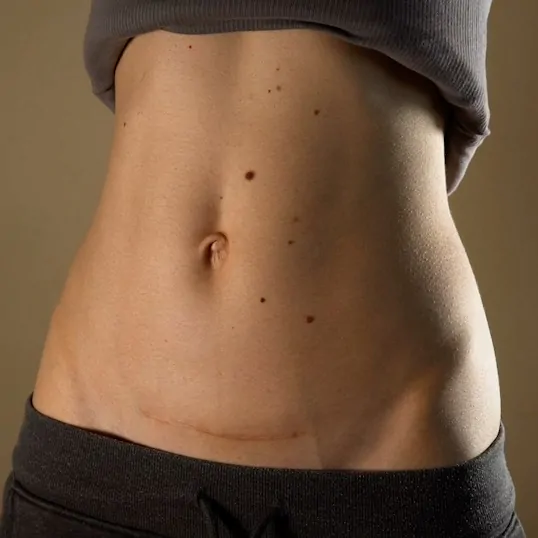
- Hypertrophic – characterized by excessive collagen formation, leading to raised areas of skin. They remain within the original wound and may become less noticeable over time. Laser hair removal on scars and hypertrophic scars of this type can be safe, but their dense structure should be considered.
- Keloid – represent a more complex form of scarring, where the scar extends beyond the initial damage. Keloids often cause discomfort and may continue to grow. Laser hair removal on this type of scar is contraindicated.
Understanding the type of scar and its characteristics helps the technician perform the procedure correctly and minimize potential risks.

How laser works: how laser hair removal affects skin and scars
Laser hair removal is a process where high-energy light beams target the pigment in hair, heating and destroying hair follicles. However, when it comes to hair removal on scars from surgery or other injuries, laser interaction with the skin requires greater caution. The process itself is safe; in some cases, it can even promote tissue regeneration by stimulating collagen production. However, it is important to consider that scars alter the skin’s structure, and its reaction to the laser may differ. For this reason, specialists treat the area near the scar, avoiding direct exposure to scar tissue. Moreover, hair typically does not grow on scars, so there is no need for treatment in these areas. It is necessary to consult a specialist before undergoing laser hair removal on scarred skin.
When is laser hair removal on scars safe: dermatologists’ recommendations
Laser hair removal on scars is possible under certain conditions. It is recommended to conduct trial sessions on small areas to assess the skin’s reaction. In most cases, the laser is not harmful to atrophic and old hypertrophic scars; however, overheating of the tissues should be avoided. Hair removal can be performed on scars after surgery if the scars are stable and show no signs of irritation.

Areas with active inflammation or newly formed scars should not be exposed to the laser, as this can worsen the skin condition and slow healing. This is particularly important when performing male laser hair removal on the back, as the skin in this area undergoes significant friction and stress. As mentioned above, the presence of keloids is also a contraindication due to their high sensitivity to any treatments.
Risks and possible complications after laser hair removal with scars
Women’s and men’s laser hair removal on the legs is one of the most popular procedures, but professional care is required in the presence of scars. Many individuals have hypertrophic scars, particularly in the shin and knee areas. It is important to understand that improper laser hair removal on scars can lead to side effects, including:
- hyperpigmentation;
- irritation and inflammation;
- scar exacerbation;
- slow skin recovery.
A proper assessment of the scar condition and attentive care for each client will help perform the procedure safely and avoid negative consequences.

How to prepare for laser hair removal on problematic skin areas
Preparation for laser hair removal on scarred skin requires special attention. This is an important step that determines the success of the procedure and the health of your skin. The following points should be considered:
- Before the procedure, discuss the characteristics of your scar: type, condition, tendency to inflammation. The specialist should evaluate whether laser exposure is safe and suggest alternative methods if necessary.
- It is recommended to conduct a trial treatment on a small area of skin with a scar to assess the reaction. This will help avoid side effects and properly adjust the laser parameters for subsequent sessions.
- A few days before the procedure, avoid sun exposure and use sunscreen with a high SPF. Tanning increases the likelihood of pigmentation after laser hair removal.
- On the day of the session, do not use creams, lotions, or any other cosmetic products on the skin with scars or without them. This can interfere with the proper functioning of the laser.
- Be sure to discuss with the specialist what risks may arise when undergoing hair removal on scar tissue. Learn how to properly care for the skin after the procedure and use products that soothe and regenerate the skin.
Following these recommendations will help minimize possible complications and answer the question of whether laser hair removal on scars is appropriate in specific cases.

























No reviews